
1. Define Your Home Carport Requirements
Choosing the right carport always starts with one thing: a clear understanding of how your household actually uses parking space. Homes that skip this step often end up with carports that feel cramped, underbuilt, or visually disconnected from the property. Before looking at styles or prices, define your real requirements based on vehicles, usage patterns, and environmental conditions.
1.1 Vehicle Size and Number of Parking Spaces
Start by identifying how many vehicles you need to protect today and within the next few years. Many homeowners plan only for current cars and regret it when a second vehicle, a pickup, or an SUV joins the household.
For modern residential projects, designers often recommend evaluating both vehicle footprint and door-opening clearance, not just parking width. This is where a modern metal carport structure becomes popular, as it allows wider spans without bulky columns that restrict movement. In several suburban builds, homeowners upgraded from a basic steel frame to a streamlined contemporary metal carport system specifically to gain cleaner spacing for larger vehicles.
Below is a practical reference many architects use during early planning:
| Vehicle Type | Recommended Width | Recommended Depth | Suggested Clearance |
|---|---|---|---|
| Sedan | 10–12 ft | 18–20 ft | Standard |
| SUV | 12–14 ft | 20–22 ft | Extra side clearance |
| Pickup Truck | 14–16 ft | 22–24 ft | Reinforced structure |
| Two Vehicles | 20–24 ft | 20–24 ft | Central column-free span |
If your layout includes trucks or heavier vehicles, structural strength matters just as much as size. In those cases, homeowners often move toward a reinforced aluminum solution rather than lightweight frames.
1.2 Daily Usage and Parking Frequency
Next, consider how often vehicles enter and exit the carport each day. A carport used twice a day functions very differently from one serving multiple drivers, guests, or delivery vehicles.
For example, in family homes where vehicles rotate frequently, owners often prefer open-span designs that reduce maneuvering time and minimize the risk of door contact. In these scenarios, builders commonly specify a heavy-duty aluminum carport because it supports wider spacing while maintaining long-term rigidity. Several residential projects with frequent vehicle turnover have shifted to a reinforced aluminum carport solution to avoid column interference and reduce daily wear.
When usage increases, pay attention to these decision points:
-
Turning radius inside the carport, especially for SUVs
-
Roof height clearance for roof racks or cargo boxes
-
Structural stability under repeated vibration from daily movement
High-frequency use exposes weaknesses faster than weather ever will, so material selection should reflect real-world habits, not ideal scenarios.
1.3 Climate and Environmental Conditions
Environmental exposure directly influences carport performance over time. Homes in coastal, snowy, or high-wind regions require different considerations than properties in mild climates.
In areas with heavy rain or seasonal storms, homeowners often prioritize drainage slope and corrosion-resistant finishes. In wind-prone regions, structural anchoring and load capacity become the deciding factors. This explains why many properties in exposed locations choose a heavy-duty carport structure designed to handle uplift and lateral stress. In such cases, selecting from a dedicated heavy-duty carport category simplifies the decision process and reduces long-term risk.
Real-world example:
A hillside residence with open exposure adjusted its carport plan after the first winter caused visible sway in a lightweight frame. The replacement focused on reinforced aluminum profiles and deeper footings, which eliminated movement and improved overall confidence in daily use.
2. Select the Right Metal Structure and Materials
Material choice defines how a carport performs over decades, not just how it looks on installation day. A well-designed metal structure must balance strength, weight, corrosion resistance, and long-term stability, especially for residential projects where daily use and weather exposure compound over time.
2.1 Aluminum vs Steel for Modern Metal Carports
When homeowners compare aluminum and steel, the real question is not which material is “stronger,” but which one delivers usable strength with lower long-term risk. In residential applications, aluminum often outperforms steel because it resists corrosion without relying on surface coatings alone and maintains structural integrity with less mass.
For a Modern Metal Carport, aluminum frames allow wider clear spans and cleaner profiles while still supporting residential load requirements. Steel may offer higher raw tensile strength, but it adds weight, increases foundation demands, and introduces long-term corrosion management.
| Factor | Aluminum Structure | Steel Structure |
|---|---|---|
| Weight | Lightweight, easier handling | Heavy, requires stronger footing |
| Corrosion Resistance | Naturally corrosion-resistant | Depends on coatings |
| Maintenance | Low | Moderate to high |
| Structural Flexibility | Excellent for wide spans | Strong but less flexible |
| Residential Suitability | High | Situational |
For most homes, aluminum delivers more usable performance per pound than steel, especially when aesthetics and maintenance matter as much as strength.
2.2 Load Capacity and Structural Thickness
Load capacity depends on profile design, wall thickness, and connection quality, not material alone. Residential carports often fail early because buyers focus on appearance while ignoring section thickness and joint engineering.
In practice, designers evaluate three load types:
-
Dead load from the roof structure itself
-
Live load from snow, debris, or maintenance access
-
Environmental load from wind uplift and lateral pressure
Heavier-use households or properties in exposed locations often require thicker aluminum profiles and reinforced beam connections, especially where vehicles exceed standard passenger weight. This is where customized solutions become valuable. A custom aluminum carport system allows engineers to adjust beam thickness, column spacing, and anchoring depth instead of forcing a one-size-fits-all frame.
2.3 Surface Finishes and Corrosion Resistance
Surface treatment determines how well a carport ages in real environments. Powder coating, anodizing, and protective primers each serve different purposes, but coating quality matters more than coating type.
In coastal or high-humidity regions, aluminum with a high-quality powder-coated finish resists oxidation far better than painted steel. In dry climates, finish choice often shifts toward UV stability and color retention rather than corrosion alone.
From field installations, one pattern remains consistent:
Carports with inferior finishes show visual wear long before any structural issue appears, which affects property value and homeowner confidence even when the frame remains intact.
Choosing the right finish ensures the structure looks intentional, not temporary—even after years of exposure.
3. Determine Proper Size and Layout for Your Property
Proper sizing and layout define whether a carport feels like a seamless extension of your home or an afterthought added for convenience. A well-planned layout improves daily usability, protects vehicles more effectively, and preserves the visual balance of the property. Before finalizing dimensions, evaluate how space, height, and surroundings interact as a complete system.
3.1 Single, Double, or Extended Carport Layouts
The first decision involves how many vehicles the carport must accommodate without forcing tight parking or awkward entry angles. Single layouts work for compact households, while double or extended designs suit growing families or homes with mixed vehicle sizes.
In residential planning, extended layouts often support flexibility, such as combining daily parking with guest or recreational vehicle space. This approach frequently leads homeowners to choose a Modern Metal Carport because aluminum structures allow longer spans with fewer columns, keeping circulation clear. For projects that require additional width or depth, designers often specify a reinforced aluminum carport configuration from the heavy-duty category, ensuring stability across wider footprints.
3.2 Clearance Height and Vehicle Compatibility
Height clearance influences both vehicle access and long-term usability. Many carports fail not because of width, but because roof height limits future vehicle choices.
When planning vertical clearance, homeowners should account for:
-
Vehicle height including roof racks or cargo boxes
-
Door swing and trunk opening clearance
-
Drainage slope and roof structure depth
For SUVs, pickups, or utility vehicles, increasing clearance by even 12–18 inches prevents daily inconvenience. In properties where multiple vehicle types rotate regularly, builders often recommend a heavy-duty aluminum structure to support taller profiles without compromising rigidity.
3.3 Integration with Driveway and Home Exterior
A carport should align naturally with the driveway and architectural lines of the home. Poor alignment increases turning difficulty and visually separates the structure from the property.
Experienced installers follow a simple placement sequence:
-
Align the carport entry with the driveway approach angle
-
Match roof pitch and beam orientation to the home façade
-
Position columns to avoid blocking doors, walkways, or sightlines
In modern residential builds, homeowners often prefer a clean aluminum carport system that mirrors contemporary exterior materials and finishes. For properties that host visitors or light business use, a commercial-grade aluminum carport solution offers wider access lanes and enhanced durability while maintaining visual consistency.
4. Match Modern Design with Your Home Architecture
Design compatibility determines whether a carport adds architectural value or visually disrupts the property. A carport that matches structural logic but ignores architectural language often looks temporary, regardless of build quality. The goal here is alignment—proportion, form, and finish should echo the home rather than compete with it.
4.1 Minimalist and Contemporary Design Styles
Modern residential architecture favors clean lines, open spans, and visual restraint. That is why many homeowners lean toward a Modern Metal Carport when working with contemporary or minimalist homes. Aluminum structures support slimmer profiles, fewer visible fasteners, and longer uninterrupted beams, which align naturally with modern façades.
In real projects, designers often reduce visual weight by:
-
Limiting column count along the façade
-
Using flat or low-profile beams instead of boxed frames
-
Aligning structural lines with window mullions or façade panels
When the carport follows the same horizontal and vertical rhythm as the house, it stops looking like an add-on and starts reading as architecture.
4.2 Roof Types and Visual Impact
Roof selection influences how the carport integrates with the home more than any other single design element. Flat, low-slope, and mono-pitch roofs each project a different visual message.
Most installers follow this logic:
-
Flat or low-slope roofs pair best with modern and cubic homes
-
Mono-pitch roofs visually guide rainwater away while adding direction
-
Deeper roof edges increase shade but add visual mass
Roof thickness matters as much as roof shape. Oversized roof profiles overwhelm modern homes, while thinner profiles preserve a light, intentional look. This balance explains why aluminum structures often outperform steel in modern designs—they deliver strength without bulk.
4.3 Color and Finish Coordination
Color coordination should reinforce the home’s palette, not introduce contrast without purpose. Neutral tones such as matte black, charcoal, and warm gray dominate modern residential projects because they integrate easily with stone, concrete, and glass.
A practical coordination method many architects use:
-
Match carport color to window frames or metal trims
-
Use one shade darker than the façade for depth
-
Avoid high-gloss finishes that exaggerate reflections
Finish quality affects perception long before durability becomes visible. A consistent, well-applied finish signals permanence and design intent, while mismatched colors instantly reveal poor planning.
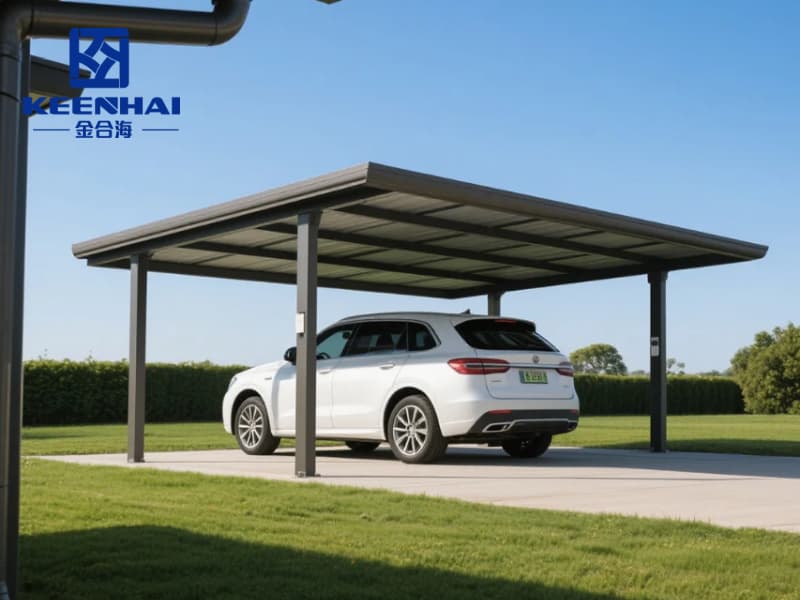
5. Evaluate Installation, Customization, and Flexibility
Installation strategy often determines whether a carport project stays efficient or becomes a source of delays and compromises. The right choice balances construction speed, structural adaptability, and long-term flexibility, especially for residential properties where site conditions and future needs rarely stay static.
5.1 Modular vs Custom-Built Modern Metal Carports
Homeowners typically choose between modular systems and fully customized builds. Modular solutions offer predictable dimensions and faster installation, while custom-built structures adapt precisely to site constraints and design goals.
For many residential projects, a Modern Metal Carport works best when customization addresses real constraints such as uneven ground, irregular driveways, or architectural alignment. In hillside or limited-access properties, builders often favor a custom aluminum carport solution because it allows precise column placement, beam sizing, and roof geometry without forcing compromises.
Key decision factors include:
-
Available installation space and access width
-
Required column spacing near doors or walkways
-
Roof alignment with existing structures
Customization solves problems that modular sizing cannot, especially when properties deviate from standard layouts.
5.2 Expansion and Future Vehicle Planning
A well-designed carport should not lock homeowners into today’s vehicle lineup. Families often add larger vehicles, secondary cars, or utility equipment within a few years.
Experienced designers plan for expansion by:
-
Allowing structural capacity for extended roof spans
-
Reserving anchor points for future columns
-
Maintaining clearance for taller or wider vehicles
Designing for expansion upfront costs far less than rebuilding later, particularly when structural reinforcements integrate from the start.
5.3 Installation Requirements and Site Conditions
Site conditions directly influence installation complexity and structural performance. Soil stability, drainage slope, and surface materials all affect anchoring methods.
Installers typically follow this evaluation sequence:
-
Assess soil type and compaction level
-
Confirm drainage direction and surface runoff
-
Select anchoring depth and base plate configuration
Properties with sloped driveways or mixed surfaces often require adjustable column bases and reinforced footings. Ignoring site realities leads to alignment issues, uneven load distribution, and premature wear, even when materials appear strong on paper.